
Between 2020 and 2023, social strategy centered on reach and impressions. Dashboards rewarded volume. Teams scaled output because distribution appeared linear. More posts often meant more exposure.
From 2024 to 2025, the obsession shifted to engagement rate. Marketers optimized for comments, reactions, and shares. Platforms adjusted feeds to reward interaction depth, but engagement was still treated as a surface metric.
In 2026, distribution no longer responds directly to reach or engagement. It responds to predicted behavioral continuation. AI ranking systems now calculate the probability that a piece of content will extend a user session, reinforce platform habit, and strengthen identity clustering.
I have audited accounts across Meta, TikTok, LinkedIn, and YouTube through multiple ranking shifts. The pattern is consistent. Distribution expands when behavioral signals align with retention models. It contracts when signals weaken, even if follower counts remain high.
Social media is no longer about posting more content.
It is about engineering signals that AI ranking systems reward.
That shift defines AI-driven visibility engineering.
What Actually Changed in 2026?
Why Social Media Algorithms No Longer Prioritize Reach
In 2026, reach is not a target metric inside ranking models. It is an output variable derived from predicted behavioral value.
Across major platforms, observable behavior supports this shift:
- On Meta properties, distribution drops sharply when three-second retention falls below internal thresholds. High follower pages still see suppressed reach if early scroll-away rates increase.
- Instagram weights saves and shares significantly higher than likes. Posts with strong save velocity often scale even when like counts are average.
- TikTok clusters viewers based on behavioral similarity. Videos scale when micro-cohorts show strong completion patterns, not when total views spike early.
- LinkedIn prioritizes dwell time over raw reactions. Long-form posts with lower reaction counts can outperform viral reaction-heavy posts if reading time remains high.
- YouTube ranks based on session extension. A video that keeps viewers on-platform after watching often outperforms one with higher standalone click-through rate.
The social media algorithm 2026 environment operates on probability scoring models. The core objective is continued usage.
From Chronological Feeds to Predictive AI Models
Chronological feeds sorted content by time. Engagement-based feeds ranked by interaction volume. Predictive AI feeds rank by behavioral probability.
Modern AI social media ranking systems evaluate:
- Likelihood of watch completion
- Likelihood of saving or sharing
- Likelihood of triggering follow-up sessions
- Likelihood of reinforcing interest clusters
Distribution now begins with a controlled sample. The model observes early signals from a small audience cluster. If retention and behavioral depth exceed threshold predictions, the content expands into adjacent behavioral clusters.
This is not follower-based distribution. It is cluster-based probability testing.
Followers are simply one input into the identity graph. Behavioral similarity now determines expansion.
Engagement vs Retention vs Behavioral Depth
Not all signals carry equal weight. Signal hierarchy has become clearer through testing.
Below is a simplified comparison of signal weighting patterns observed across platforms:
| Signal Type | Relative Weight | Reasoning Behind Weighting |
| Likes | Low | Easy to perform. Low commitment. Weak predictor of continued usage. |
| Basic Comments | Moderate | Indicates cognitive engagement but can be low depth. |
| Shares | High | Signals perceived value. Expands behavioral graph. |
| Saves | High | Indicates future intent and repeat session potential. |
| Dwell Time | Very High | Direct indicator of attention retention. |
| Completion Rate | Very High | Strong predictor of session continuation. |
| Private Messages | Extremely High | High emotional or practical value signal. |
Retention acts as a ranking accelerator. When completion rates exceed platform benchmarks, distribution velocity increases.
Behavioral depth compounds. A viewer who watches fully, saves, and shares sends multiple reinforcing signals. AI models interpret this as strong predicted value.
This explains why reach fluctuates unpredictably for many brands. They optimize for visible metrics. Platforms optimize for behavioral continuation probability.
The Core Framework: Visibility Engineering
What Is AI-Driven Visibility Engineering?
AI-driven visibility engineering is the strategic structuring of content to trigger high-value behavioral signals that AI ranking systems amplify. It focuses on retention, search alignment, authority reinforcement, and private engagement rather than surface metrics such as impressions or likes.
This is not content creation in the traditional sense. It is signal architecture.
A visibility engineering strategy aligns creative decisions with machine learning ranking logic.
The 4 Core Signal Layers That Drive Distribution in 2026
Distribution in 2026 is multi-layered. One strong signal is insufficient. Content that scales consistently activates four layers simultaneously.
1. Retention Layer
Retention is the foundation.
Platforms test early abandonment rates within seconds. On short-form video, first three to five seconds determine expansion eligibility. On LinkedIn and long-form platforms, scroll depth and reading time signal intent.
Hook structure must create open cognitive loops. Pattern interrupts reset attention. Micro-loop storytelling structures information so that viewers anticipate continuation.
For example, structuring content as progressive insight layers increases completion probability. Each segment answers one question while raising another. This sustains watch duration.
Retention is not about theatrics. It is about minimizing drop-off probability.
When retention rises above benchmark thresholds, the algorithm increases testing volume.
2. Search Layer
Search has become integrated inside social platforms.
In-app keyword optimization influences discoverability beyond follower graphs. Captions, on-screen text, and spoken keywords are indexed. TikTok and YouTube Shorts both parse spoken language through automated transcription systems.
If your content matches active search queries within a cluster, initial distribution gains relevance weight.
Search alignment increases baseline impressions. Retention then determines scale.
Without search alignment, content relies solely on feed probability testing. That is less stable.
Search-layer engineering involves aligning topic phrasing with actual user query behavior inside platforms.
This layer bridges SEO logic with AI social media ranking.
3. Authority Layer
Authority now functions through identity graph reinforcement.
Platforms map creators and brands to topic clusters. Consistent point of view strengthens cluster association. Random topic shifts weaken authority signals.
Content clustering increases predictive confidence. When an account consistently produces related insights, the algorithm better predicts audience fit.
Authority in 2026 is behavioral consistency.
It is not follower count. It is cluster reinforcement.
4. Private Engagement Layer
Private engagement has become one of the strongest distribution multipliers in 2026.
Public engagement signals attention. Private engagement signals intent.
When users move from feed interaction to direct messages, saves, or profile visits, platforms interpret that behavior as high-value consumption. It indicates the content created enough relevance to justify deeper action.
On Meta platforms, content that triggers DM replies often receives secondary distribution waves. On TikTok, shares into private messages strongly influence expansion into adjacent behavioral clusters. On LinkedIn, profile clicks and connection requests after content consumption reinforce authority scoring.
Private engagement functions as a depth amplifier.
Strategically, this means content should naturally invite further interaction without manipulation. For example:
- Offering a resource that requires a comment-to-DM trigger
- Creating content that prompts viewers to save for later implementation
- Structuring posts that encourage thoughtful responses rather than surface reactions
This is not about automation gimmicks. It is about designing content that logically leads to private action.
When retention, search alignment, authority reinforcement, and private engagement align, distribution scales predictably.
That is visibility engineering in practice.
Small Businesses vs Large Brands: Who Wins in 2026?
Why Small Businesses Can Beat Big Brands
In 2026, size does not guarantee distribution.
Machine learning models evaluate signal density, not budget size. Smaller brands often generate stronger behavioral depth because they operate within tighter audience clusters.
There are three structural advantages small businesses hold.
First, niche authority.
When a local fitness coach focuses exclusively on hypertrophy training for men over 35, the authority signal strengthens quickly. The behavioral cluster becomes tightly defined. The algorithm predicts relevance more confidently.
Large brands often dilute authority by covering multiple segments within one account.
Second, faster experimentation cycles.
Small teams adjust hooks, formats, and messaging rapidly. Because AI models reward early retention signals, rapid iteration improves performance faster.
Large brands move slower due to approval layers.
Third, audience intimacy.
Smaller audiences often produce higher comment depth and DM rates. Those signals directly influence ranking expansion. High follower counts with shallow interaction do not outperform smaller accounts with strong behavioral intensity.
When analyzing distribution data across mid-sized creator accounts and enterprise brand pages, the accounts with higher save-to-view ratios and completion rates consistently scale further, regardless of follower base.
Where Large Brands Still Dominate
Large brands maintain structural advantages in three areas.
First, historical data advantage.
Accounts with years of behavioral data give AI systems stronger predictive baselines. Models understand what content types historically perform within certain clusters. That reduces volatility.
Second, multi-format dominance.
Large brands can produce long-form video, short-form video, carousels, and live sessions simultaneously. Multi-format presence increases surface area within the ranking system.
YouTube in particular rewards brands that contribute to session depth across formats.
Third, ad plus organic integration.
Paid promotion accelerates testing volume. When paid campaigns generate high retention and share rates, organic expansion often follows. Ad-driven data becomes training input for organic ranking models.
However, ad spend cannot compensate for weak retention. Paid impressions without behavioral depth still fail to scale organically.
The determining factor in 2026 is signal strength, not brand size.
The New KPI Stack

The 2026 Social Media KPI Framework
Traditional metrics such as reach, impressions, and raw engagement rate fail to explain distribution outcomes in 2026.
The updated social media KPI framework 2026 prioritizes behavioral indicators that align with AI ranking objectives.
Core KPIs now include:
- Average watch duration
- Completion rate
- Save rate
- Share-to-view ratio
- Comment depth
- DM initiation rate
Each metric connects directly to retention probability or behavioral expansion.
Average watch duration measures attention stability. Platforms compare this against content length and cluster benchmarks.
Completion rate indicates narrative structure strength. On short-form video, completion above 70 percent often triggers secondary testing waves. On longer formats, benchmarks vary but consistent drop-off reduction correlates with expansion.
Short-form video now functions as both a retention engine and a conversion layer. Its ability to compress attention while driving action makes it structurally important in AI ranking systems. If you want a deeper breakdown of how short-form video intersects with commerce behavior and signal depth, explore our analysis on short-form video and social commerce.
Save rate signals future intent. On Instagram, posts with save rates above 5 percent frequently outperform those with higher like rates but lower saves.
Share-to-view ratio expands cluster reach. TikTok videos exceeding 1 to 2 percent share-to-view ratios often enter adjacent interest groups.
Comment depth matters more than comment count. Threads with multi-reply discussions indicate higher cognitive engagement.
DM initiation rate functions as a high-intent conversion proxy. Even small increases significantly impact distribution probability.
Benchmark ranges vary by platform and niche. However, internal audits across B2B LinkedIn accounts show that posts exceeding 8 to 10 percent dwell-time improvement over baseline consistently outperform previous reach averages.
The shift is clear.
Visibility is now a function of behavioral density.
Why “Post More Content” Is the Wrong Advice in 2026
The recommendation to increase posting frequency originated from earlier feed mechanics. When distribution was partly chronological, volume increased surface probability.
In 2026, volume without signal quality weakens performance.
AI saturation is real. Platforms ingest enormous volumes of AI-generated content daily. Generic output with predictable structure lowers retention quickly. When early viewers scroll away, the ranking model reduces expansion probability.
This creates a negative training loop.
High-frequency posting without signal optimization generates weak data. Weak data reduces predictive confidence. Reduced confidence limits reach.
Behavioral testing window theory explains this clearly.
Every post enters a short evaluation window. Early retention and engagement signals determine expansion eligibility. If multiple posts from the same account underperform in early windows, the system becomes more conservative with future testing.
Posting more low-retention content compresses your testing windows.
Signal density matters more than frequency.
One post with strong completion rate, high save velocity, and meaningful comment threads generates more sustainable distribution than five posts with average metrics.
Content volume is not visibility strategy.
Behavioral signal optimization is.
Implementation Blueprint
A Step-by-Step Visibility Engineering Playbook
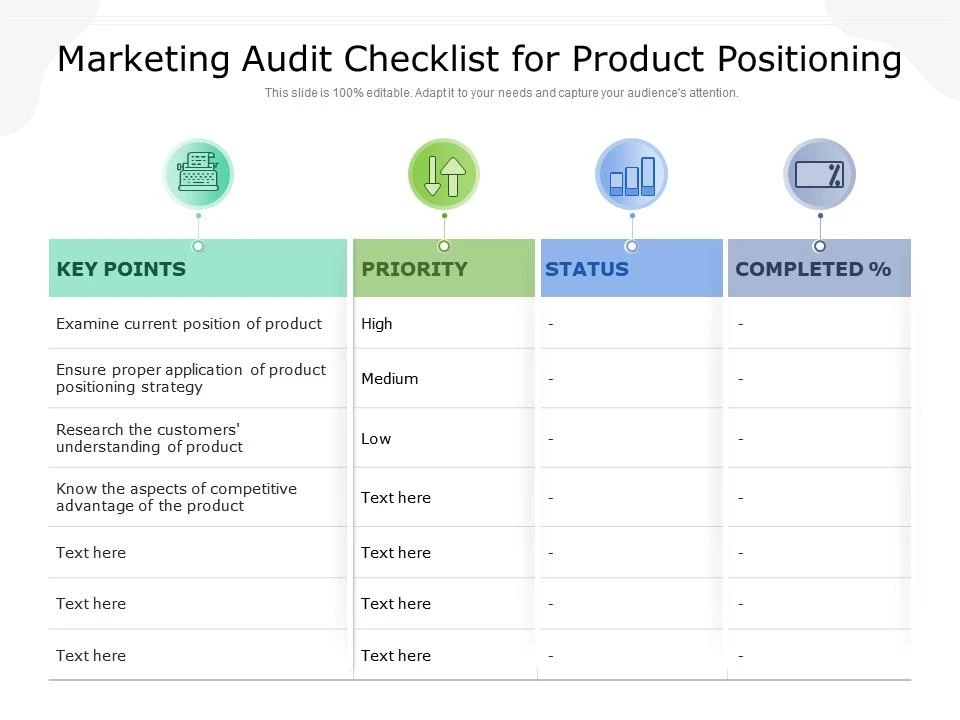
Execution in 2026 requires structural discipline. Creative instinct alone is insufficient. Each piece of content must be evaluated against signal probability.
Below is a structured implementation sequence used in platform audits and advisory work.
Step 1: Audit Your Signal Baseline
Before changing strategy, establish a behavioral baseline.
Review the last 30 to 60 pieces of content and extract:
- Average watch duration
- Completion rate
- Save rate
- Share-to-view ratio
- Comment depth
- DM initiation rate
Segment by format. Short-form video, carousels, text posts, and long-form video behave differently inside ranking systems.
Identify:
- Where retention drops sharply
- Which posts triggered secondary distribution waves
- Which posts generated private engagement
Do not focus on total reach. Focus on patterns that preceded expansion.
The objective is to understand your current signal profile. Without baseline clarity, optimization becomes guesswork.
Step 2: Rewrite Hooks for Retention
Retention determines eligibility for scale.
Analyze first 3 to 8 seconds of video content or first 2 lines of text posts. If drop-off is high, the issue is structural.
Strong hooks accomplish three things:
- Establish relevance immediately
- Introduce tension or open a loop
- Signal specific value to a defined cluster
Avoid generic introductions. Replace broad framing with precise statements that match audience identity.
For example, instead of saying “Here are social media tips,” specify the audience and outcome.
Micro-loop structuring increases completion. Present insights sequentially, with each point logically requiring the next. This reduces abandonment.
Retention optimization should be iterative. Test revised hooks against baseline metrics. Improvement of even 5 to 10 percent in completion can significantly increase distribution probability.
Step 3: Integrate Search Intent
In-app search behavior has increased across platforms. TikTok, Instagram, and YouTube now function as discovery engines.
On TikTok specifically, ranking now depends heavily on how spoken keywords, captions, and on-screen text align with user search behavior. If you want a deeper breakdown of how indexing and ranking mechanics work inside TikTok’s search system, read our detailed guide on TikTok SEO video ranking and search optimization.
Map your topic clusters to actual search phrasing inside each platform.
Integrate:
- Keywords naturally within captions
- On-screen text that reflects search queries
- Spoken phrasing aligned with user questions
Search alignment ensures initial indexing within relevant behavioral clusters.
This increases baseline impressions. Retention then determines scaling.
Without search integration, you rely solely on feed sampling. With search alignment, you create an additional distribution channel.
Search and retention together create compounding probability.
Step 4: Build Authority Clusters
Authority is now algorithmic identity reinforcement.
Define 3 to 5 core themes that represent your expertise. Every piece of content should reinforce at least one theme.
Avoid random topic jumps. When accounts frequently shift focus, clustering weakens. Predictive confidence drops.
Develop content series that expand depth within a defined theme. This increases repeat consumption and strengthens identity mapping.
For example, a B2B founder focusing on AI-driven visibility engineering should consistently explore ranking logic, behavioral signal optimization, and KPI restructuring. Over time, the algorithm associates the account with those clusters.
Authority reduces volatility.
When the system recognizes strong topical alignment, new content receives more confident testing.
Step 5: Engineer DM Funnels
Private engagement is a high-value behavioral indicator.
Design content that logically encourages deeper interaction.
Examples include:
- Offering frameworks or templates delivered via DM
- Prompting thoughtful questions that require detailed responses
- Encouraging saves for implementation checklists
Avoid artificial urgency or manipulative tactics. The objective is relevance-driven engagement.
Track DM initiation rate and correlate it with distribution patterns. In many audits, posts with higher DM triggers receive secondary distribution waves within 24 to 48 hours.
Private engagement increases perceived value density.
This completes the visibility engineering loop.
Future Outlook
What Happens Next?
Current ranking behavior suggests three emerging developments.
First, AI comment sentiment scoring will likely gain greater influence.
Platforms already analyze comment quality. As natural language processing models improve, sentiment depth and contextual relevance will contribute to authority scoring. Threads demonstrating expertise and nuanced discussion will likely receive greater weight.
Second, authority graph scoring will expand.
Identity mapping currently clusters creators around topics. Future iterations will likely incorporate cross-content behavioral consistency more aggressively. Accounts with consistent expertise reinforcement will benefit from stronger predictive confidence.
Third, cross-platform behavioral identity mapping will mature.
Users operate across multiple platforms. As data models improve, behavioral similarities across ecosystems may influence recommendation logic within individual platforms. While direct data sharing is limited, pattern-based inference is advancing.
These projections align with current trajectory. Ranking systems are moving toward deeper behavioral evaluation and predictive authority modeling.
Creators and brands who understand probability-based distribution will adapt more effectively than those chasing surface metrics.
FAQs
What is AI-driven visibility engineering in simple terms?
It is the practice of structuring content to generate behavioral signals such as retention, saves, shares, and private engagement that AI ranking systems interpret as high-value, increasing distribution probability.
Why does high engagement not always increase reach in 2026?
Because engagement volume alone does not guarantee retention or session continuation. AI models prioritize signals that predict sustained usage, not surface interaction.
Is follower count still important?
Follower count influences initial sampling, but behavioral performance determines expansion. High followers with low retention do not guarantee reach.
How often should brands post in 2026?
Frequency should not exceed signal quality capacity. Prioritize retention and behavioral depth before increasing volume.
Which KPI matters most?
Completion rate and average watch duration are primary accelerators. Save rate and share-to-view ratio function as expansion multipliers.
Conclusion
Social media performance in 2026 is not determined by creativity alone.
It is determined by how effectively content aligns with AI prediction models.
Distribution is probability-based. Retention accelerates ranking. Behavioral signals outweigh vanity metrics. Volume without signal density weakens expansion.
AI-driven visibility engineering is not a trend. It is the structural response to machine learning ranking systems that evaluate value before users consciously react.
Those who understand signal architecture will scale.
Those who chase reach will continue to wonder why it disappears.