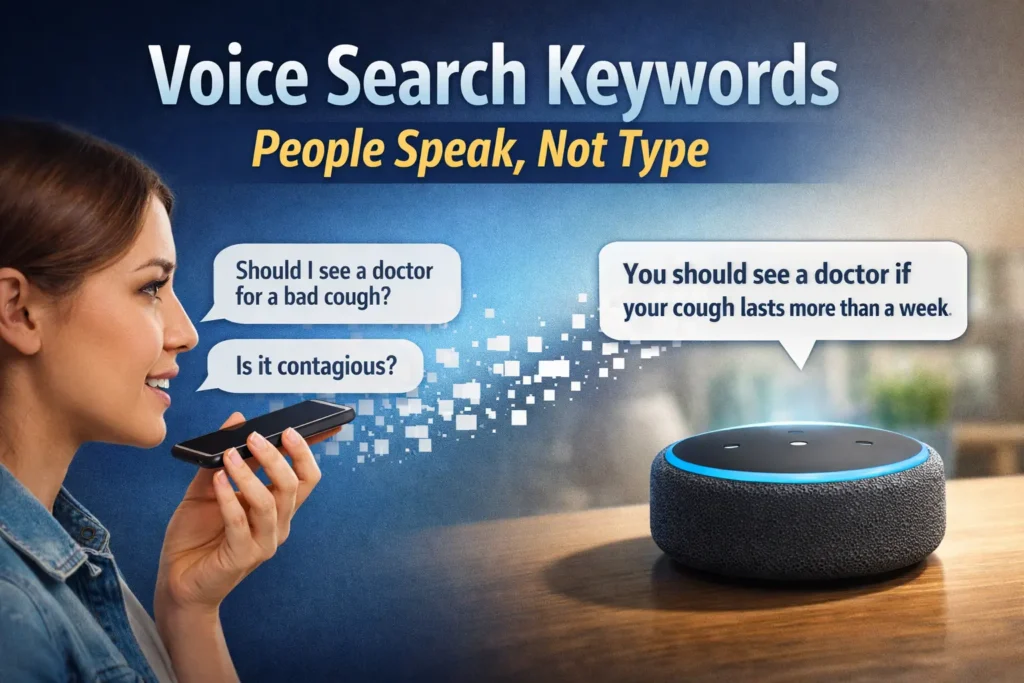
Voice search did not fail. It just stopped behaving like a typed search.
Most marketers expected voice to mirror keywords spoken out loud. That assumption broke early. Spoken queries do not compress intent. They expand it. People ask full questions. They add context. They expect memories. They wait for one answer, not ten blue links.
That expectation quietly rewired search behavior. Intelligent systems have been quietly altering how people access and trust information long before voice interfaces became common.
When someone speaks to a device, they are not browsing. They are delegating. The assistant decides what matters, what sounds trustworthy, and what gets read aloud. If your content does not fit that decision model, rankings stop mattering.
I have watched brands rank first and still lose visibility because the assistant pulled an answer from somewhere else. I have also seen small publishers dominate voice results with average backlinks but precise answers.
This is not an SEO trick. It is a structural shift.
Voice search forces content to earn the right to be spoken. That bar is higher than ranking. It requires clarity, confidence, and restraint. It also exposes every weakness in how we write for search.
This article explains how conversational search actually works, what breaks when you apply old SEO habits, and how to structure content so AI assistants choose you when only one answer survives.
What Is Voice Search & Conversational SEO?
Voice search is not a faster search. It is a delegated search.
A user speaks a question to an assistant and expects a direct response. No scrolling. No comparison. No follow-up browsing unless the answer fails.
Conversational SEO is the practice of structuring content so AI systems can extract, validate, and deliver that answer with confidence.
Traditional SEO optimizes for retrieval. Conversational SEO optimizes for selection.
Here is the difference that matters.
Typed search spreads intent across results. Voice search concentrates intent into a single response. That changes how relevance works. Keyword proximity matters less. Answer quality matters more. Context matters most.
This shift matters now for three reasons.
First, AI assistants increasingly answer without sending traffic. Zero-click responses are not a bug. They are the product. If your content cannot stand alone as an answer, it disappears from the experience.
Second, assistants evaluate trust differently. They look for consistency, structure, and language patterns that signal confidence. Overwritten content loses.
Third, AI Overviews and conversational results pull from sources that explain things clearly, not exhaustively. Long content still helps, but only if it supports short answers inside it.
Most teams still optimize pages. Voice search forces you to optimize answers.
How AI Assistants Process Voice Queries
AI assistants do not search the web the way users do. They interpret, predict, and compress.
When someone asks a question, the system first classifies intent. Informational, local, transactional, or follow-up. Then it evaluates context. Location, previous questions, device type, and even time of day influence what comes next.
This is where many SEO strategies fail.
Assistants like Google Assistant, Siri, and Alexa do not treat each query as isolated. They stack intent. A follow-up question inherits assumptions from the first. If your content answers only one step, it drops out.
Large language models such as ChatGPT push this even further. They synthesize responses across sources and look for internal coherence. Contradictions lower confidence. Vague phrasing weakens selection.
Natural language understanding plays a central role here. Assistants parse meaning, not keywords. They look for subject, action, constraint, and outcome. Content that dances around the point or buries the answer loses priority.
Ranking alone no longer guarantees visibility in this model. Recent Google core updates have reinforced this shift by prioritizing answer selection and confidence over traditional ranking signals.
What most sites miss is how structure influences trust.
An assistant prefers a clear answer followed by supporting detail. It avoids content that sounds uncertain or hedged. Phrases like “it depends” without resolution often get skipped unless followed by a decisive explanation.
Context retention also changes formatting needs. Answers must make sense when read aloud. Long sentences with multiple clauses break comprehension. Lists without verbal cues confuse listeners. Clear transitions matter more than clever writing.
Intent stacking changes content architecture. A strong page anticipates the next question and answers it cleanly. Weak pages answer only what was asked.
This is why FAQ sections work when they feel natural and fail when they look templated.
Voice Search Ranking Factors You Must Optimize
Conversational Keywords & Question Queries
Voice search favors full questions and spoken phrasing because that mirrors how people talk to devices.
Instead of “best CRM software,” users ask “what CRM works best for a small sales team.” The intent is richer. The expected answer is narrower.
Most sites still stuff questions into headings and answer them with marketing copy. That fails. Assistants look for natural phrasing that sounds like a human response, not a brochure.
A strong answer starts with a clear statement, then adds context. It avoids qualifiers unless they add clarity. It uses everyday language.
What breaks is over-optimization. Pages that list dozens of questions without depth confuse selection systems. One solid answer beats ten shallow ones.
Featured Snippets & Answer Formatting
Voice assistants often pull from featured snippet style blocks because they reduce uncertainty.
This does not mean you chase snippets blindly. It means you structure answers so they can stand alone.
Forty to sixty words works well. That range fits spoken responses without truncation. It also forces discipline.
Most sites fail by front-loading fluff. The answer hides in the third paragraph. Assistants stop reading before they get there.
Formatting matters too. Short paragraphs. Clear sentences. No tables for answers meant to be spoken.
Page Speed & Mobile Experience
Voice search happens primarily on mobile and smart devices. Performance issues reduce eligibility before content quality even matters.
Slow pages, heavy scripts, and delayed rendering signal risk. Assistants prefer sources that load fast and consistently.
What most teams miss is that voice results favor stability over novelty. A fast, boring page often wins over a slow, impressive one.
Mobile usability also affects trust. If a page breaks on mobile, it loses confidence signals even if the answer is strong.
Structured Data & Schema Markup
Schema helps assistants understand what your content represents. FAQs, how-to sections, local business details, and product attributes all benefit.
Schema does not create rankings. It removes ambiguity.
Most sites either ignore schema or overuse it. Marking everything as an FAQ dilutes trust. Use it where the content genuinely answers questions.
Clear markup supports answer extraction. It does not replace good writing.
Local Intent Signals for Voice Search
Voice searches skew local. People ask where, when, and how close.
Local intent relies on consistency. Business name, address, hours, and category must align everywhere. Minor mismatches reduce confidence.
Most brands focus on reviews and forget clarity. An assistant needs to know if you are open now, not just if you are popular.
Pages that answer practical questions win. Parking, pricing, timing, and availability matter more than brand slogans.
How to Optimize Content for Conversational Queries
This is where most experienced teams still struggle.
They understand the theory. They still write like rankings matter more than responses.
Conversational optimization starts with accepting a hard truth. Your content will often be consumed without a click. The value shifts from traffic volume to answer ownership. If your response becomes the default explanation, you win influence even when analytics do not show it.
Question-Answer Writing That Sounds Human
Every strong conversational page answers questions the way a subject matter expert would speak.
That means no throat-clearing. No scene-setting paragraphs before the answer. No brand positioning inside the first sentence.
Start with the answer. Then explain why.
For example, if the question is “How does voice search affect SEO strategy,” the opening line should state the impact clearly. Follow with reasoning, not qualifiers. Assistants avoid content that sounds unsure.
Most sites bury the answer because writers fear sounding simplistic. That fear costs visibility.
Natural Spoken Language, Not Search Syntax
Spoken language favors clarity over density.
Short sentences work. Everyday verbs work. Concrete nouns work. You can still sound authoritative without sounding academic.
Read your answer out loud. If it feels awkward to say, it will sound worse when a device reads it. Assistants penalize complexity because it increases the chance of misunderstanding.
What most people miss is rhythm. Alternating short and longer sentences improves comprehension. Walls of uniform sentence length flatten emphasis and reduce retention.
FAQ Blocks That Do Not Look Templated
FAQ sections help when they reflect real questions and real answers.
They fail when they look manufactured.
Avoid patterns like “Q:” and “A:” repeated endlessly. Use natural headings. Phrase questions the way people actually ask them, not the way keyword tools suggest.
One or two strong FAQs beat ten shallow ones. Each answer should add something new, not restate the same idea with different words.
The 40 to 60 Word Answer Rule
Most assistants prefer answers that fit within a short spoken window.
Forty to sixty words usually hits the sweet spot. Long enough to explain. Short enough to finish before attention drops.
This constraint forces discipline. It removes fluff. It clarifies thinking.
Long content still matters. It provides depth, authority, and context. But the short answer must stand on its own. Think of it as the headline argument supported by the rest of the page.
Pages that respect this structure consistently outperform longer but unfocused content in conversational results.
Why Long Content Still Wins Behind Short Answers
Here is the paradox.
Assistants prefer short answers. Ranking systems still reward depth.
The solution is layered content.
Lead with a concise answer. Follow with explanation, examples, edge cases, and nuance. This gives the assistant a clean extraction point while signaling expertise through depth.
Most sites choose one or the other. The best pages do both.
Voice Search Optimization Checklist
This is not a generic list. These are the elements I see separate content that gets selected from content that gets ignored.
Content Foundations
- Answer the primary question in the first paragraph
- Use natural language that works when read aloud
- Keep primary answers within 40 to 60 words
- Anticipate the next logical question and address it
- Remove filler phrases that delay the point
What breaks most content here is hesitation. Clear answers beat cautious ones.
Technical Readiness
- Ensure pages load fast on mobile connections
- Avoid heavy scripts above the fold
- Maintain consistent URL structure for evergreen answers
- Use clean HTML that renders reliably across devices
Speed is not about scores. It is about predictability. Assistants avoid fragile pages.
User Experience Signals
- Make content readable without zooming
- Use clear headings that describe outcomes, not topics
- Avoid intrusive popups that block content
- Keep paragraphs short and scannable
UX signals feed trust. Poor experience lowers confidence even if the content is strong.
Schema with Restraint
- Apply FAQ schema only where questions are genuine
- Use organization and local business schema accurately
- Keep structured data aligned with visible content
- Avoid marking promotional copy as answers
Schema clarifies intent. Abuse creates doubt.
Local Optimization Specifics
- Keep business details consistent everywhere
- Answer practical questions about access, hours, and pricing
- Write location pages for humans, not directories
- Prioritize clarity over keyword variation
Local voice search rewards usefulness. Ambiguity loses.
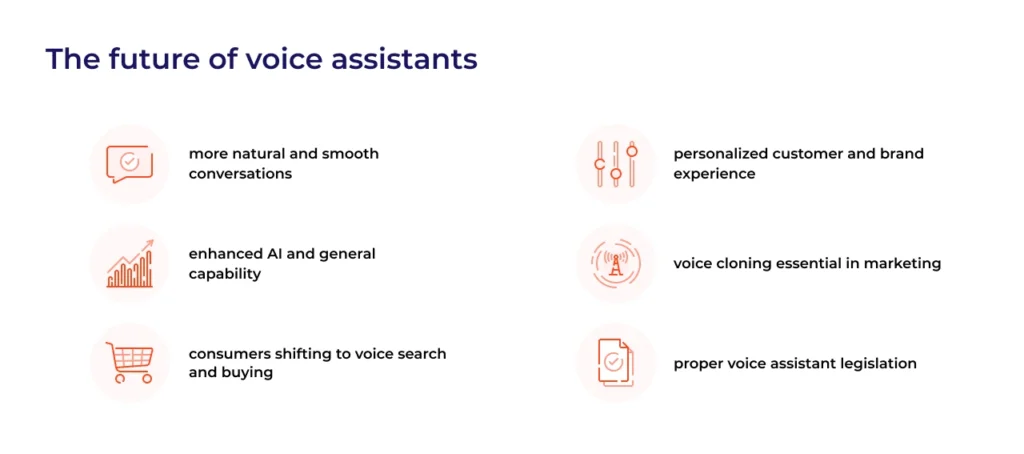
Future of Voice Search & AI Conversations
Voice search will not explode. It will quietly absorb.
By 2026, most users will not label what they are doing as voice search. They will simply talk to systems that already know context, preferences, and constraints. Search will feel less like retrieval and more like delegation.
This shift creates winners and invisible losers.
Where Conversational Search is Heading
AI assistants will reduce clarification steps. Fewer follow-up questions. More confident responses. That confidence comes from better context stitching across sessions, devices, and data sources.
This matters because it raises the bar for content selection.
Assistants will favor sources that show consistency over time. Pages that change tone, definitions, or framing too often will lose trust. Stable explanations outperform constantly rewritten ones.
Expect fewer citations per answer. Systems will compress multiple sources into a single synthesized response. Being one of many contributors will matter less than being the source that anchors the explanation.
This is where authority becomes structural, not performative.
What Brands and Publishers Should Prepare for Now
First, stop measuring success only by clicks.
Answer visibility, brand mentions, and repeated selection matter more in conversational environments. If an assistant regularly uses your explanation, you shape understanding even without traffic.
Second, invest in explanation quality, not just coverage.
Covering every keyword variation no longer helps. Owning the clearest explanation does. This favors teams that understand their subject deeply enough to explain it simply.
Third, build answer durability.
Pages that chase trends lose coherence. Assistants prefer explanations that age well. Update examples. Keep definitions stable. Avoid timestamped hype.
Fourth, align brand voice with spoken language.
Many brands write well for reading and poorly for listening. That gap will cost visibility. Spoken clarity is now a competitive advantage.
What Will Stop Working
Several tactics already show signs of decay.
Keyword-stuffed FAQs will fade. Assistants recognize pattern abuse quickly. Repetitive structures signal low confidence.
Overlong introductions will disappear from selection. Assistants do not wait for you to get to the point.
Thin content networks built to capture snippets will collapse. Without depth behind answers, trust erodes.
Chasing featured snippets without improving explanation quality will fail. Selection systems evolve faster than templates.
What Will Quietly Outperform
- Clear definitions.
- Practical examples.
- Direct language.
- Pages that answer one question exceptionally well.
Publishers who resist overproduction and focus on fewer, stronger pages will win. Brands that empower subject matter experts to write instead of delegating entirely to content teams will stand out.
Local businesses that explain logistics clearly will dominate voice queries. Hours, access, pricing, and expectations matter more than slogans.
Long-form content that supports short answers will age better than either extreme.
A Final Expert Take
Voice search exposes a simple truth that traditional SEO allowed many teams to avoid.
If you cannot explain your topic clearly, you do not understand it well enough to be trusted.
AI assistants amplify that reality. They choose clarity over cleverness. Confidence over volume. Usefulness over persuasion.
This is not a loss of opportunity. It is a return to fundamentals.
The brands that get heard are not the loudest. They are the ones that answer without wasting a second.
Does voice search reduce website traffic?
Yes. Voice search often answers questions without a click. The tradeoff is influence. If your explanation becomes the default answer, you shape decisions even when traffic data stays flat.
How long should answers be for voice search?
Most AI assistants prefer answers between 40 and 60 words. This length fits spoken delivery without truncation and signals confidence without over-explaining.
Are voice search and AI Overviews the same thing?
No. Voice search prioritizes spoken clarity and single answers. AI Overviews synthesize multiple sources visually. Content can serve both, but structure and tone must adapt.
Do keywords still matter for voice search?
They matter less than intent clarity. Assistants interpret meaning, not phrasing. Natural language that answers real questions consistently outperforms keyword-stuffed copy.
Why does my site rank but not get chosen by voice assistants?
Because ranking measures relevance, not trust. Assistants prioritize clarity, consistency, and answer structure. Many top-ranking pages fail at explanation.

Mandeep Wraich
Digital Marketing Specialist and Content Strategist focused on data-driven growth, SEO, and performance-led content. At AIPulseInsights.com, articles explore how AI, analytics, and emerging digital trends influence marketing strategies, brand visibility, and business decision-making. With a strong foundation in content analysis, paid media, and strategic storytelling, the work shared on this platform converts complex industry shifts into practical insights that support marketers and businesses in achieving consistent, measurable growth. The goal is to simplify innovation and empower readers to stay ahead in a rapidly changing digital landscape.